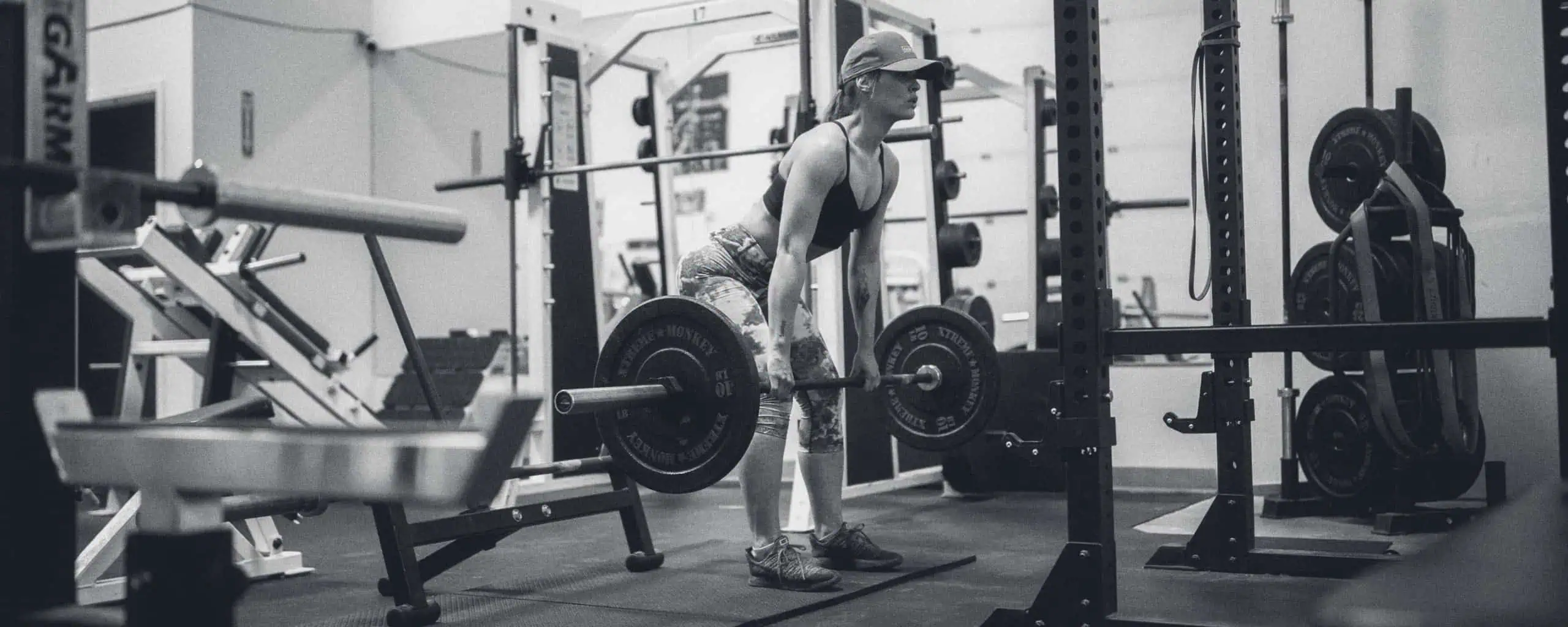
Why Heavy Lifting Is the Most Protective Thing You Can Do After 40
The advice given to women about lifting weights has historically been wrong. Not slightly nuanced. Wrong. Light weights for tone. Cardio to lose weight. Pilates for the core. These approaches have their place, but none of them delivers the protective effects that heavy, progressive strength training provides. In midlife, when bone density, muscle mass, insulin sensitivity, and cognitive function are all under hormonal pressure, the evidence points in one clear direction.
Muscle Mass Is Not Optional in Midlife
Sarcopenia, the progressive loss of skeletal muscle with age, begins in the 30s and accelerates significantly in perimenopause. Women lose approximately 3 to 5% of muscle mass per decade from the age of 30, with the rate accelerating as estrogen declines. Muscle tissue is not just about strength or appearance: it is your primary site of glucose uptake (critical for insulin sensitivity), a major driver of resting metabolic rate, a systemic anti-inflammatory tissue, and, through myokines released during contraction, a direct contributor to brain health.
Light resistance work does not stimulate muscle protein synthesis adequately to offset this loss. To build or preserve muscle in midlife, the stimulus needs to challenge the muscle close to its capacity, which means progressive loading with weights that feel genuinely demanding in the 6 to 12 repetition range. This is metabolic and longevity advice.
Bone Density: The Argument That Settles the Question
Peak bone density is established by the mid-20s. After that, the question is how quickly it declines. Estrogen is one of the primary hormones maintaining bone density, it reduces bone resorption (breakdown) and supports mineralisation. As estrogen declines in perimenopause and postmenopause, bone resorption accelerates. Women lose 1 to 2% of bone density per year in the years immediately around menopause; in some women, this reaches 3 to 5% annually in early postmenopause.
Resistance training applies mechanical load to bone, stimulating osteoblast activity (bone building) and reducing the rate of bone resorption. Impact and load-bearing exercise are the most effective bone-protective interventions available, more effective, for most women, than calcium supplementation alone. Heavy compound movements (squats, deadlifts, loaded carries) create the multi-directional bone stimulus that reduces fracture risk at the sites most vulnerable in postmenopause: hip, spine, and wrist.
Metabolic Health: Muscle as the Missing Variable
Every kilogram of muscle tissue burns approximately 13 kcal per day at rest, compared to roughly 4.5 kcal for the same mass in fat. When women lose 5 to 10kg of muscle between ages 35 and 55 (which is entirely possible without intentional resistance training), the reduction in resting metabolic rate is not trivial. Combined with the insulin sensitivity changes of perimenopause, the result is a genuine metabolic shift that explains why 'eating the same as always' produces different results.
Building muscle in midlife reverses this. Resistance training improves insulin sensitivity independently of weight change, the muscle contractions themselves enhance GLUT-4 transporter activity, which improves how well cells absorb glucose. For women with insulin resistance or elevated fasting glucose in midlife, resistance training is a first-line intervention, not an adjunct to other approaches.
Brain Fog and the Cognitive Case for Lifting Heavy
Resistance training has a stronger evidence base for cognitive protection in midlife than cognitive training apps, meditation, or brain-training games. The mechanism: heavy resistance training raises BDNF (brain-derived neurotrophic factor), the primary growth factor for neurons, more significantly than moderate aerobic exercise. It also reduces neuroinflammation, improves cerebrovascular function, and enhances the prefrontal-hippocampal connectivity that supports executive function and memory.
For midlife women who have noticed declining processing speed, word-finding difficulties, or reduced focus. These are the brain systems that resistance training specifically supports. The dose matters: research suggests 2 to 3 sessions per week of progressive, challenging strength work, with adequate load, produces measurable cognitive benefits over 12 to 24 weeks. 'Light toning' sessions do not show the same effects.
Frequently Asked Questions
Is it safe to lift heavy in perimenopause?
Yes, for most women, with appropriate progression and form. The risk of injury from heavy lifting done correctly is far lower than the long-term risk of sarcopenia, osteoporosis, insulin resistance, and cognitive decline from not lifting. If you're new to heavy lifting, starting with a qualified strength coach to establish movement foundations is worth the investment, particularly for spinal loading positions.
How heavy is 'heavy'?
A working definition: heavy enough that the final 2 to 3 repetitions of a set require genuine effort, and you could not perform significantly more repetitions with good form. If you can perform 15+ repetitions easily, the load is not providing adequate stimulus for the adaptations described above. Progressive overload, gradually increasing the challenge over weeks, is what produces results.
What about joint pain, doesn't heavy lifting make it worse?
Counterintuitively, resistance training is one of the most evidence-backed interventions for joint pain, including osteoarthritis. Strengthening the muscles around a joint reduces load on the joint surface itself and improves proprioception (joint position sense). The key is appropriate loading and movement quality, not avoiding load, which allows deconditioning that worsens joint symptoms over time.
Get new posts delivered to your inbox each week without the noise.

Explore more insights
Practical guidance for the midlife transition