What Blood Glucose Patterns Tell You About Midlife Energy
What Blood Glucose Patterns Tell You About Midlife Energy
A continuous glucose monitor (CGM) reveals whether your blood sugar is stable throughout the day or spiking and crashing, which directly impacts energy, focus, and mood. Most midlife women discover they're far more sensitive to carbohydrates than they were at 25, and their glucose patterns explain fatigue they've been treating as normal aging. The data often points to a solvable problem.
How Glucose Affects Energy and Cognition
Your brain runs on glucose. When blood sugar is stable (roughly 90–120 mg/dL for most people, baseline depending on your personal physiology), your brain has steady fuel and you feel focused and energized. When blood sugar spikes (say, to 150–180 after a carb-heavy meal) and then crashes (dropping to 60–70 within an hour), your brain loses fuel suddenly. That crash feels like fatigue, brain fog, or an urgent need to eat.
Repeated glucose spikes and crashes throughout the day create a pattern: you eat breakfast, glucose spikes, then crashes an hour or two later, so you eat a snack to feel better, glucose spikes again, crashes again. By afternoon you're exhausted from the metabolic whiplash. You attribute the fatigue to aging. Actually, your glucose pattern is creating the fatigue - a pattern you could smooth out.
Why Your Glucose Tolerance Changed After 40
Your insulin sensitivity - how efficiently your cells use insulin to take glucose from your blood - naturally drops with age. At 25, you might eat a bagel and spike to 130 mg/dL, then recover to normal within an hour. At 45, the same bagel might spike you to 160 mg/dL and take two hours to recover. You haven't changed; your metabolism has. Hormonal shifts (especially declining estrogen) contribute to this. So does reduced muscle mass - muscle is a glucose sink, so less muscle means less places for glucose to go.
Some of the fatigue you've been attributing to "midlife" might actually be glucose dysregulation. The good news: it's largely controllable through food sequencing, fiber, and activity patterns. You don't have to accept afternoon crashes as inevitable. You can smooth them out, which would smooth out a major source of energy disruption.
Reading Your CGM Data: Spikes, Crashes, and Stability
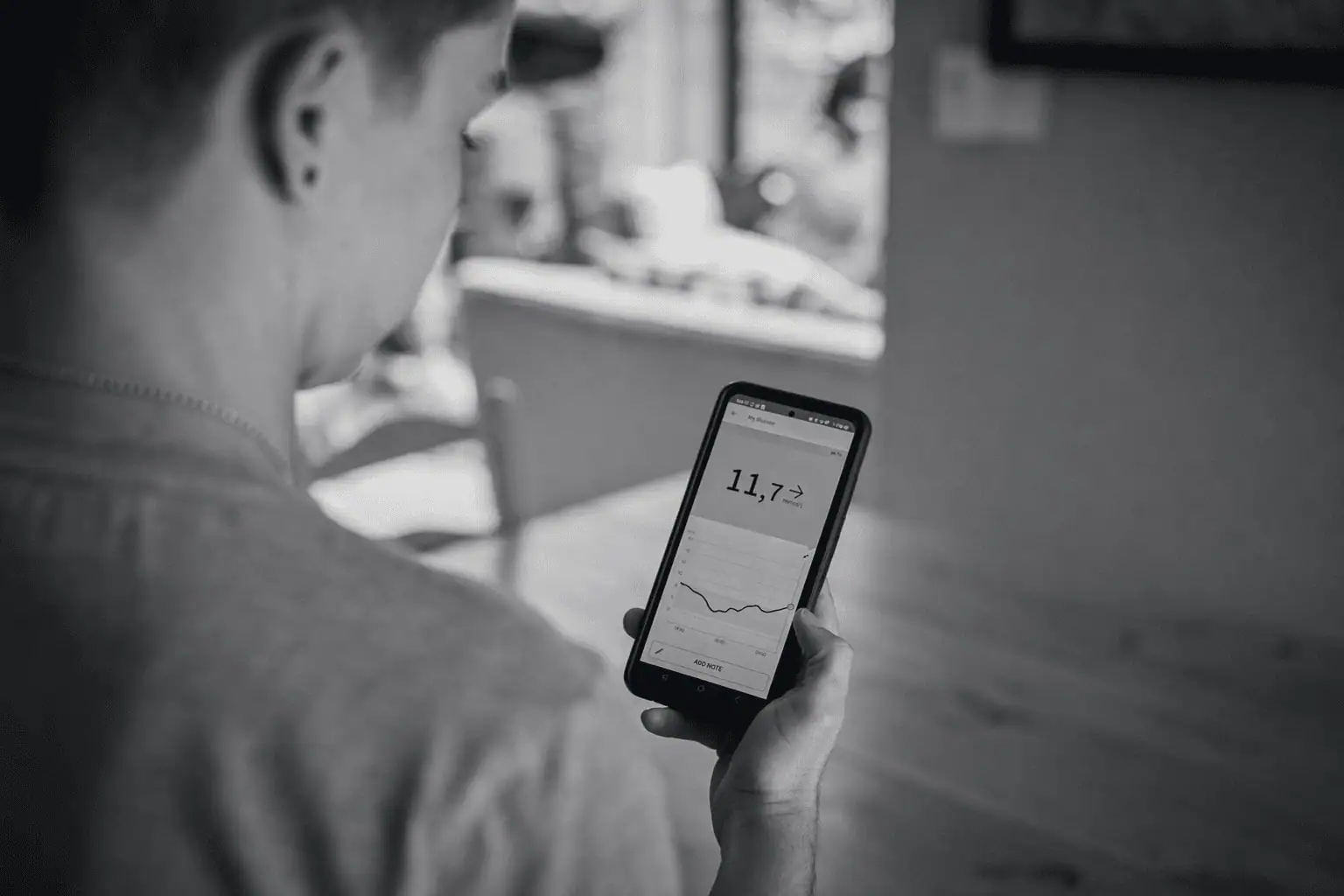
If you use a continuous glucose monitor, look for your personal spike threshold. Most devices show your glucose in real time and record trends. Baseline (fasting) glucose typically sits at 80–100 mg/dL. A "normal" response to a meal is to stay below 140 mg/dL (some sources say below 160). But normal for the general population isn't necessarily normal for you. Some people tolerate 160 mg/dL fine; others feel the cognitive lag starting at 130.
More important than your peak is your recovery: how long your glucose stays elevated, and how far it crashes afterward. A quick spike to 150 that comes back to baseline within an hour is a different metabolic event than a slow rise to 145 that stays elevated for two hours. Track which foods, portions, and food combinations create the pattern you feel worst during. Your individual data is more informative than general guidelines.
The Food Sequence Strategy: Real Impact on Stability
The order you eat food components matters significantly for glucose response. Eating vegetables and protein before carbohydrates blunts the glucose spike your carbohydrates create. Eating a piece of bread with only butter creates a different glucose response than eating the same bread with eggs and spinach first. Adding vinegar or lemon juice before a meal also moderates glucose rise.
Fiber has dramatic effects: eating the same carbohydrate food with its fiber intact (whole grain bread, for instance) creates a much smaller and slower glucose rise than eating the same carbs in processed form without fiber (white bread). Fat slows glucose absorption. Protein does too. Most people don't need to eliminate carbohydrates - they need to eat carbs in a matrix that slows their absorption. Your CGM data will show you which combinations work for your metabolism.
Exercise and Glucose: A Recovery Tool
Movement immediately after eating has profound effects on glucose response. A 10-minute walk after a meal (even a gentle walk) reduces the glucose spike by 20–30%. The muscle movement uses glucose immediately, so less glucose ends up in your bloodstream. This is one of the simplest, most effective interventions you can implement. If you eat lunch and then work at your desk, your glucose curve is one shape. If you eat lunch and then walk for 10 minutes, your glucose curve is significantly flatter.
Strength training also improves glucose handling over time by building muscle. More muscle means more glucose receptors, more places for glucose to go. If you've been sedentary and build muscle through resistance training, your glucose tolerance actually improves - you'll see lower spikes and faster recovery on the same meals over weeks of training. This is one mechanism through which exercise directly improves energy in midlife.
Insulin Sensitivity and Carbohydrate Tolerance
Some midlife women discover through CGM use that they're more insulin-resistant than they realized. They might do better on a lower-carbohydrate approach, not because carbohydrates are "bad," but because their individual physiology handles carbs less efficiently than it did at 25. Others discover they tolerate carbs fine - their glucose pattern is stable - but they weren't eating carbs in a way that prevented spikes.
There's no universal "best" carbohydrate intake for all midlife women. Some function well on 150g daily; others feel better at 75g. Your CGM data combined with how you feel reveals your personal optimum. If your glucose is stable and your energy is good at 130g carbs, that's your target. If you're spiking constantly at 150g but stable at 90g, lower is better for you. The data replaces guessing.
Frequently Asked Questions
Do I need a CGM if I'm not diabetic?
Not necessarily. Many nondiabetic people use CGMs to understand their personal glucose patterns, which helps optimize energy and reduce fatigue. If you have unexplained afternoon energy crashes, if carb-heavy meals make you foggy, or if you're trying to optimize athletic performance, a CGM can be illuminating. If your energy is stable and you eat well, you might not gain much from the data. It's a tool for understanding a specific problem.
What's a "normal" fasting glucose for midlife?
Fasting glucose typically falls between 80 and 110 mg/dL in nondiabetic people. As you age, fasting glucose often rises slightly (this is normal aging). If your fasting glucose is consistently above 125 mg/dL, that's worth discussing with your doctor - it's in the prediabetic range. If you're in the 100–125 range, that's intermediate and warrants monitoring. Aim to keep fasting glucose below 100 if possible, but modest elevation is common in midlife.
Can I improve my glucose tolerance at 45?
Yes. The primary drivers are muscle mass (strength training improves glucose handling), activity patterns (regular movement, especially after meals), sleep quality (poor sleep impairs glucose metabolism), and food composition (fiber, fat, and protein all moderate glucose rise). Stress management also helps - cortisol elevates glucose. You can measurably improve your glucose tolerance in midlife through these interventions. Your CGM will show the improvement.
What causes sudden glucose spikes that last for hours?
A slow, prolonged glucose elevation might indicate a combination of high carbohydrate load, high fat (which slows digestion and extends absorption), low fiber, and no movement. The meal took a long time to digest, so your glucose stayed elevated for hours. An infection or illness can also elevate baseline glucose across the day. If you see a pattern of prolonged spikes with certain foods, those are foods to sequence differently or reduce portion sizes for. If prolonged spikes appear without obvious food cause, investigate illness or stress.
Get new posts delivered to your inbox each week without the noise.

Explore more insights
Practical guidance for the midlife transition