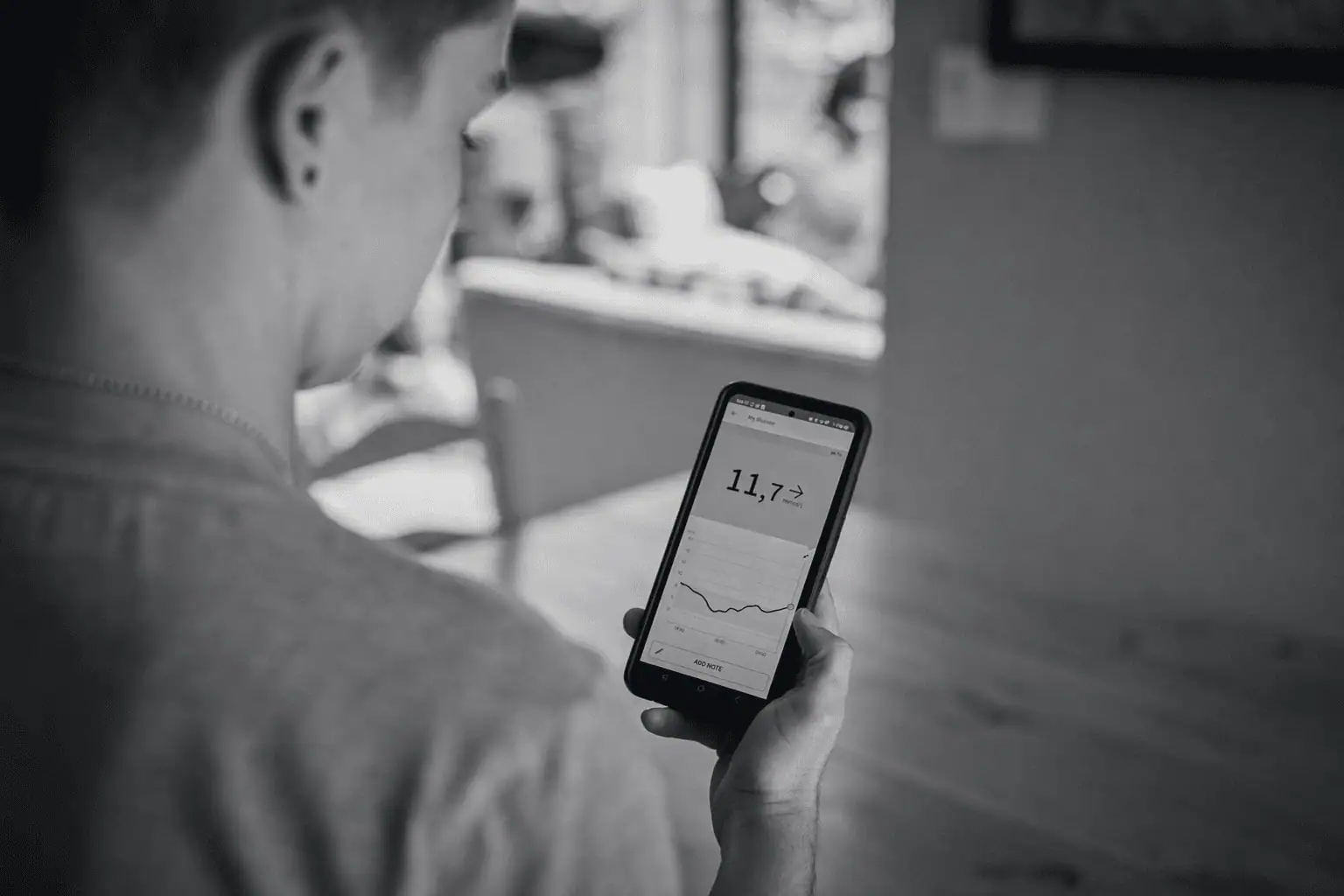
What Does Human Interpretation Add to Health Data?

Your Data Needs a Translator. Not Just an Algorithm.
Technology identifies patterns; humans interpret what patterns mean. An algorithm can flag that your heart rate variability declined 12% over three weeks. A human clinician with expertise in perimenopause can assess whether that's driven by a work project, sleep disruption, hormonal shifts, or stress - and what you should actually do about it. This contextual understanding is what transforms data from numbers into actionable intelligence.
Artificial intelligence can process thousands of data points in seconds. It can identify patterns across sleep, activity, heart rate variability, and cycle data that no human could spot as quickly. It can flag anomalies, track trends, and surface signals that would otherwise be lost in noise.
What it cannot do - not yet, and possibly not ever - is understand what those patterns mean for you, as a whole person, living a specific life, with a specific history and specific goals.
Why Can't Algorithms Interpret Your Health Data Alone?
An algorithm can tell you that your HRV has declined by 12% over three weeks. What it can't tell you is whether that decline is driven by a new work project, a deteriorating sleep environment, the beginning of perimenopause, or all three - and how to prioritise your response given everything else on your plate.
A human interpreter brings clinical knowledge, contextual understanding, and the ability to ask the question that data can't answer: "What else is happening in your life right now?" That question - and the conversation that follows - is where the data becomes useful.
How Does Hormonal Physiology Change What Your Data Actually Means?
Female physiology is cyclical, hormonally driven, and life-stage dependent. The same data point means different things depending on cycle phase, menopausal status, stress context, and individual history. Generic algorithmic interpretation - trained largely on male-dominated datasets - often misses these nuances entirely.
A human with expertise in midlife women's health can layer knowledge of hormonal physiology, clinical experience, and individual context on top of the algorithmic pattern. That combination produces insight. Either half alone produces either missed signals (human without data) or misinterpreted signals (data without human).
The Model That Works
The most effective health support combines the scale and speed of technology with the depth and nuance of human expertise. Technology collects, connects, and surfaces the signal. A human interprets it, contextualises it, and translates it into actions that make sense for your life.
This isn't a compromise between two imperfect systems. It's the combination that creates something neither can achieve alone: personalised, contextual, evidence-based health intelligence - delivered at a level that respects both the complexity of your biology and the reality of your life.
What You Should Expect
You should expect health support that does more than show you numbers. It should explain what those numbers mean for you specifically. It should adapt its interpretation as your body changes. It should combine the precision of technology with the wisdom of clinical expertise. And it should treat you as a whole person - not a collection of data points.
That's not a future aspiration. It's the standard you deserve now.
The Pattern Recognition That Emerges From Multiple Data Streams
When you look at sleep quality, training data, cycle information, mood tracking, and performance metrics individually, they're four separate data streams. When you look at them together, patterns emerge that none would reveal alone. The sleep disruption that appears to be consistent actually worsens in the luteal phase of the cycle. The energy crash that seems random actually follows poor sleep nights. The training recovery that seems unpredictable actually correlates with specific stress markers. These connections are invisible in individual data streams but obvious when someone is synthesising across domains.
This synthesis is what transforms data into intelligence. An app can't do it. A coach or clinician who understands your full picture can.
The Behavioural Insight That Emerges From Context Understanding
Understanding why you're struggling matters as much as understanding what you're struggling with. You're not lacking willpower - your dopamine signal is lower due to hormonal shifts. You're not lazy - your recovery demand is legitimately higher. You're not broken - your system is adapting to a major biological transition. These reframes aren't feel-good. They're functionally important because they change what you actually do about the problem. The right interpretation leads to the right intervention. The wrong interpretation leads to wasted effort and increasing frustration. That's where human intelligence adds irreplaceable value to health data.
Frequently Asked Questions
What does it mean when algorithms miss context?
An algorithm sees a 12% HRV decline as a signal. It doesn't know whether you just started a demanding work project, whether your sleep environment changed, whether you're experiencing hormonal shifts, or whether all three are happening. Without context, the 'insight' is either generic ('rest more') or misleading. Human interpretation adds the question: 'What else is happening in your life right now?'
Why is women's data especially hard for algorithms?
Female physiology is cyclical, hormonally driven, and life-stage dependent. The same metric - say, resting heart rate elevation -means different things in different cycle phases, different menopausal stages, and different life contexts. Generic algorithmic interpretation, often trained on male-dominated datasets, misses these nuances. A human with expertise in women's health can layer this knowledge in.
How does human support change what you do with health data?
Instead of seeing conflicting signals and not knowing which to trust, you get interpretation that integrates them. You learn that your energy crash isn't laziness but a pattern: it follows poor sleep and high training load in your luteal phase. That understanding changes what you actually do - not willpower, but strategy.
What should 'good' health data interpretation look like?
It should combine precision (specific numbers and patterns from your data) with context (what's happening in your life), integrated with expertise (understanding perimenopause biology and individual variation). The output should be actionable - not just 'your HRV is low' but 'your HRV is low because of this, and here's what to do about it.'
Get new posts delivered to your inbox each week without the noise.

Explore more insights
Practical guidance for the midlife transition