Why Counting Calories Stops Making Sense After 40
Why Counting Calories Stops Making Sense After 40
The calorie is a unit of measurement, not a biological law. After 40, your metabolism isn't ignoring the numbers you counted - it's responding to hormonal, digestive, and metabolic shifts that no app can see. Calories in, calories out is collapsing under the weight of your actual biology.
The Metabolic Shift Nobody Warned You About
When you counted calories in your 20s and 30s, you were working with a metabolism that ran like a relatively predictable machine. Muscle tissue was easier to maintain. Your liver cleared hormones efficiently. Your digestive system extracted roughly the same amount of energy from similar foods. The math worked.
After 40, your baseline metabolic rate drops about 2-3% per decade as you lose muscle mass naturally - but this isn't evenly distributed or consistent. Some of this loss accelerates around menopause. Some happens independently of your hormone changes. The point is: 1,800 calories at 42 doesn't produce the same biological outcome as 1,800 calories at 32. Your body is processing energy differently, allocating it differently, and storing it differently. Counting the calories tells you nothing about what's actually happening.
Insulin Resistance Changes the Math
Insulin resistance becomes more common in midlife, especially if you have abdominal fat or a family history of metabolic dysfunction. When insulin resistance develops, your cells become less responsive to insulin - they don't take up glucose as efficiently. Your body compensates by producing more insulin. This is happening at a cellular level, invisible to you and to your calorie tracker.
What matters now is not the total calories but the type of calories, the timing, and how your particular insulin response handles them. A 200-calorie breakfast of refined carbs and a 200-calorie breakfast of protein and fat don't land the same way in an insulin-resistant body. Your tracker can't distinguish between them. Your body absolutely can.
Hormonal Context Rewrites the Calorie Equation
Estrogen affects how your body preferentially stores fat, where it stores it, and how efficiently your body mobilizes fat for energy. As estrogen shifts in perimenopause and menopause, the places your body wants to store calories change. The efficiency with which it burns stored fat changes. Progesterone affects appetite and hunger signaling - when it drops, your hunger cues become less accurate, and no amount of calorie counting fixes a miscalibrated hunger signal.
Your thyroid function, cortisol patterns, and leptin sensitivity all shift in midlife. These are the hormones that actually govern how your body uses the energy you consume. Counting calories and ignoring these hormonal realities is like trying to balance a bank account while ignoring inflation, interest rates, and taxes. The numbers you're tracking are too simple for the system you're actually in.
Digestive Efficiency Isn't Constant
After 40, your gut lining is naturally different. You produce less stomach acid. Your bile acid synthesis shifts. Your microbiome has changed - possibly repeatedly, depending on medications, illnesses, and life stressors. All of these affect how much energy you actually extract from food and how thoroughly you digest it.
If you've had antibiotics, taken birth control, dealt with chronic stress, or had any inflammatory illness, your gut microbiome is not the same as it was at 25. This means the exact same food is delivering different amounts of usable energy. Calorie counting assumes perfect, consistent digestion. Your midlife digestion isn't perfect or consistent - it's individual, variable, and often less efficient than it used to be.
The Metabolic Damage Trap
If you've been chronically undereating or cycling between restriction and overeating for years, your metabolism may be downregulated. Your body has adapted to conserve energy at lower intake levels. Eating fewer calories triggers your body to be even more efficient at storing them. You're now in a biological state where the calorie counting approach backfires - the fewer you eat, the more your body resists weight change.
Breaking this cycle often requires eating more, not less. But calorie counting keeps you locked into the restriction mentality that created the problem in the first place. Your body needs permission to stop defending against scarcity. Numbers on a tracker don't give it that.
What Actually Matters After 40
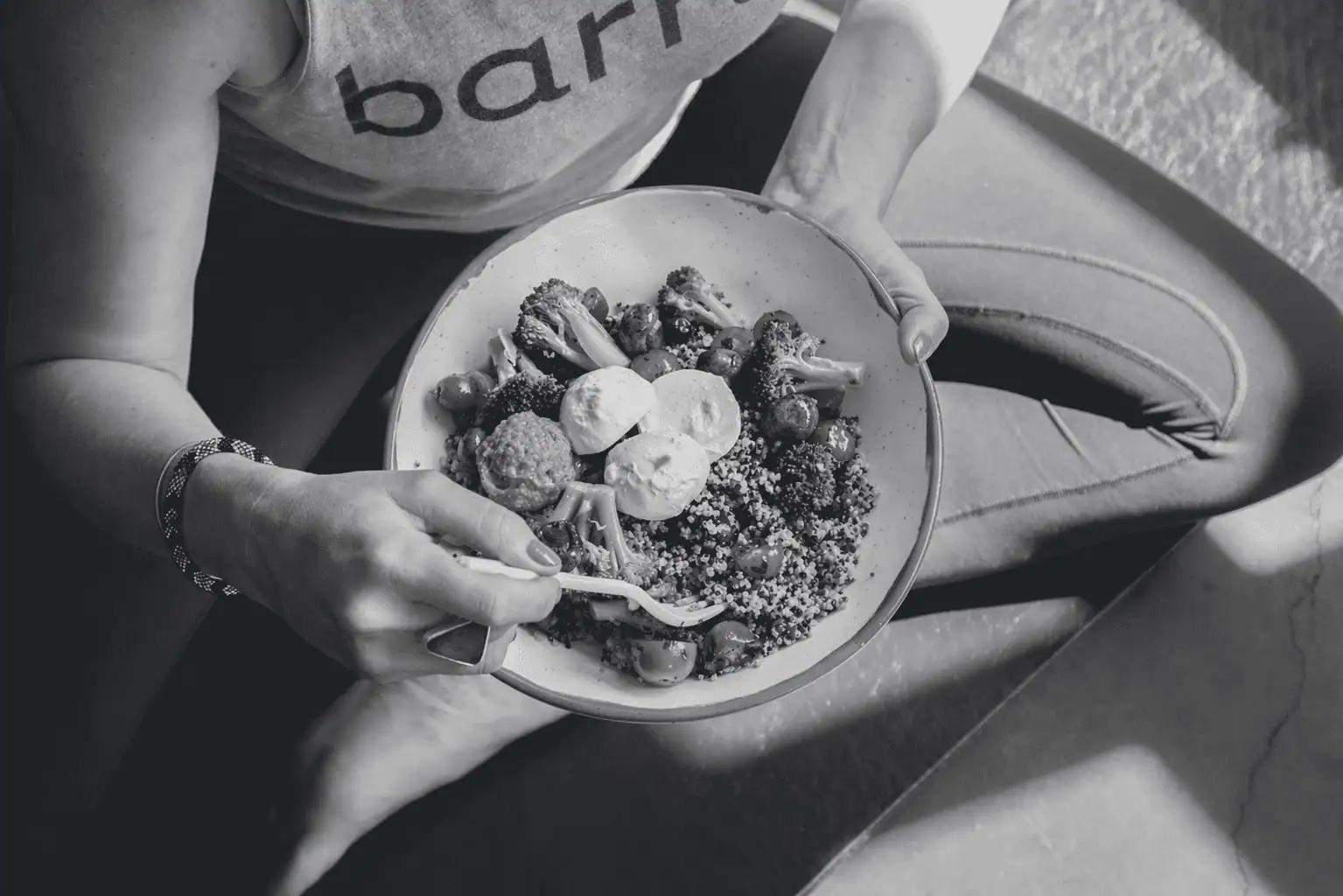
Instead of counting calories, pay attention to protein at each meal - about 25-30g is a reasonable target if you're trying to preserve muscle and manage hunger. Notice how different foods affect your energy, mood, hunger, and sleep. These are the actual biological signals. Track your own response, not the app's calculation.
Pay attention to meal timing relative to your cycle or menopause stage if that applies to you. Notice when you're actually hungry versus when you're eating out of habit, stress, or boredom. These distinctions matter far more than calorie totals. Your body is trying to tell you what it needs - it's just not speaking in calories.
Frequently Asked Questions
Does this mean calories don't matter at all?
Calories aren't irrelevant - they're just not the main variable anymore. Energy balance still exists, but it's determined by hormones, digestive health, and metabolic state, not by numbers in an app. Focus on the upstream factors that govern how your body uses energy, and the total calorie picture will take care of itself.
How do I know if I'm eating too much without tracking?
Check your energy levels, hunger patterns, sleep quality, and how your clothes fit over several weeks. If you're constantly tired, never satisfied, sleeping poorly, or gaining weight consistently, something needs to shift. But the answer usually isn't fewer calories - it's better protein, stable blood sugar, less processed food, and more sleep. Fix those first and reassess.
What if I feel like I'm overeating?
Overeating often signals inadequate protein, blood sugar dysregulation, or emotional eating, not simple excess calories. Before restricting, try eating more protein, spacing meals further apart, and checking whether you're eating when stressed or tired. Many people find that eating more of the right foods stops the overeating behavior entirely.
Get new posts delivered to your inbox each week without the noise.

Explore more insights
Practical guidance for the midlife transition