Why Does Your Wearable Data Mislead You in Midlife?
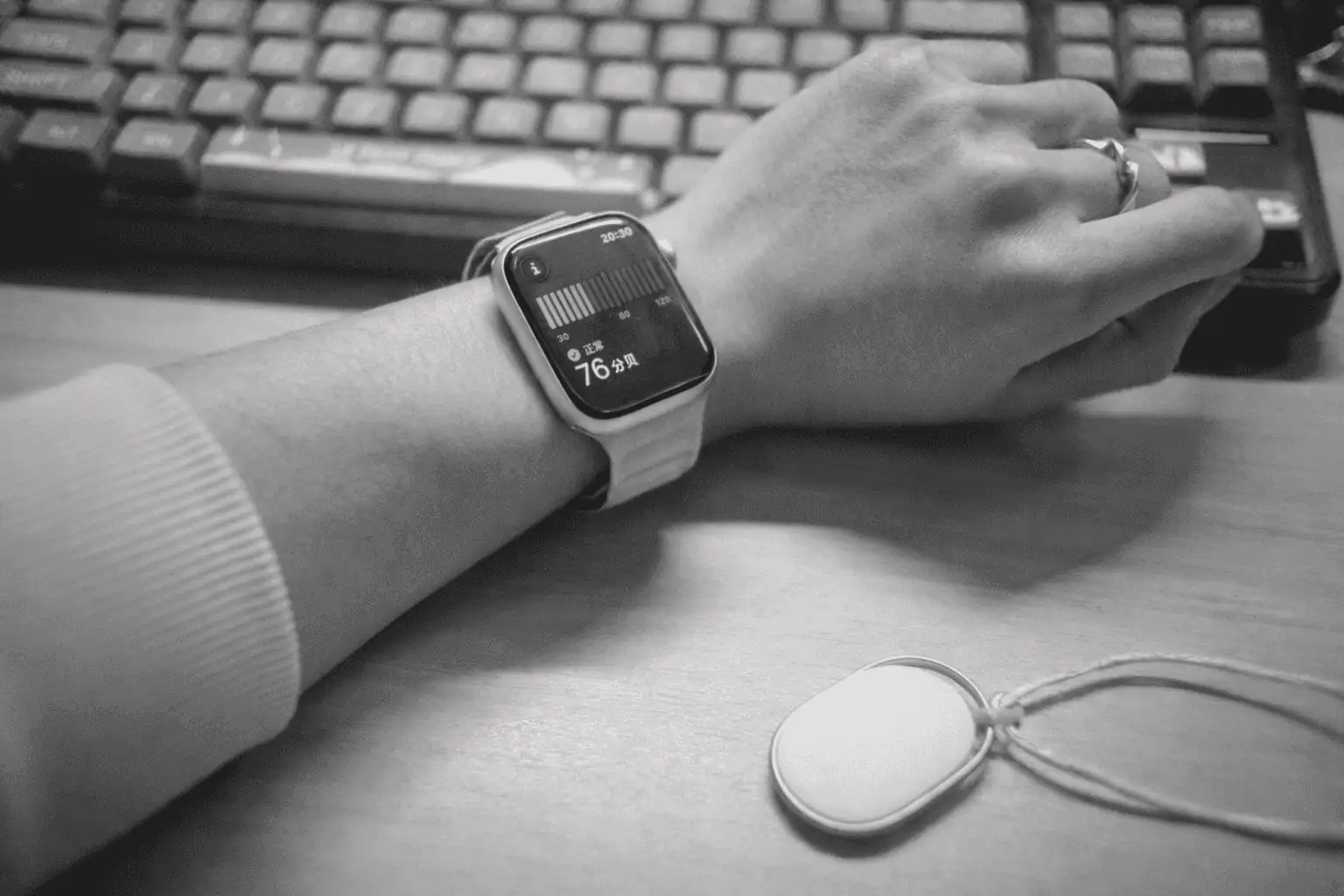
Your Wearable Is Measuring Everything. It's Explaining Nothing.
Wearable algorithms weren't built to account for hormonal fluctuations, cycle phase, or perimenopausal volatility. Without hormonal context, the same HRV drop or sleep score change can mean overtraining, hormonal shift, or something else entirely - and your wearable can't tell which.
You charge it every night. You check it every morning. It tells you your sleep score, your readiness score, your step count, and your resting heart rate. And somehow, despite all that data, you understand less about what's happening in your body than you did before you started wearing it.
That's not a failure of your device. It's a failure of context. And in midlife, context is everything.
Why Don't Wearable Algorithms Account for Hormones?
Most wearable algorithms are calibrated on general population data - which often means younger, predominantly male datasets. They don't account for hormonal fluctuations, cycle phase, perimenopausal volatility, or the specific ways midlife female physiology responds to stress, exercise, and recovery.
When your HRV drops for three consecutive days, your wearable tells you to rest. But it doesn't ask whether you're in your luteal phase, whether your progesterone is declining, or whether the drop reflects hormonal change rather than overtraining. Without that context, the recommendation may be exactly right - or completely wrong.
How Can You Interpret Wearable Data With Hormonal Context?
The promise of wearables is that more data leads to better decisions. In practice, more data without the right interpretive framework leads to confusion, anxiety, and decision paralysis. You see a bad sleep score and feel worse. You see low readiness and skip a workout that might have helped. You see elevated resting heart rate and worry about your cardiovascular health when the actual driver is a perimenopausal hot flush at 2am.
Data is only useful when it's contextualised. And the context that midlife women need - hormonal, cyclical, and nervous system-informed - doesn't exist in any consumer wearable on the market.
What to Actually Look For
Instead of chasing daily scores, look for patterns across time. HRV trends over weeks tell you more than a single morning reading. Resting heart rate across your cycle reveals hormonal influence. Sleep architecture patterns (how much deep sleep vs. light sleep you're getting) mapped against your symptoms show real connections that a daily score obscures.
The shift is from "what does today's number mean?" to "what is the pattern telling me over time?" That's the difference between tracking and intelligence.
The Question Your Wearable Can't Answer
The most important question in midlife health isn't "what's my score?" It's "what's my system doing, and why?" Your wearable can provide some of the raw inputs for that question. But it cannot answer it - because the answer requires biological context, pattern recognition across multiple data streams, and an understanding of where you are in your hormonal transition.
That's the gap between a device that tracks and a system that interprets. And it's the gap that matters most when your body is changing.
The Measurement Validity Problem That No One Discusses
Wearables measure what they're designed to measure with reasonable accuracy in healthy, stable populations. But perimenopause isn't a stable state. Your heart rate variability might drop not because your fitness has declined, but because your hormonal milieu has changed - your nervous system's baseline activation has increased due to progesterone decline, and your parasympathetic tone has decreased. A wearable can't distinguish between "your fitness declined" and "your hormonal environment changed." It just shows you the number.
Similarly, sleep stage detection in wearables is notoriously unreliable, especially in women with disrupted sleep architecture. When your sleep is fragmented, the algorithms struggle. You might show 7 hours of sleep with adequate deep sleep on your wearable while actually waking four times a night and never reaching true sleep consolidation. The data feels reassuring while your actual sleep quality is poor.
Why Trends Matter More Than Individual Days
Wearable data is most useful when you're tracking patterns across weeks and months, not fixating on daily readings. A single RHR reading of 65 vs 72 is noise — your hydration status, caffeine timing, and whether you're in the luteal phase of your cycle can shift your RHR by 10+ points. But RHR trending upward over weeks, combined with other data (sleep quality declining, HRV dropping, recovery metrics deteriorating), tells a real story: your system is in a stressed state and needs more support.
The intelligence comes from recognising patterns across data types, not from optimising any single metric. And that requires human interpretation of what the data actually means - something a wearable algorithm alone can't provide.
Frequently Asked Questions
Should I stop wearing my wearable if the data is misleading?
Not necessarily. Your wearable provides raw data; the problem is interpretation without hormonal context. Track your data, but don't let algorithms decide what it means. Note your cycle phase, stress, sleep quality subjectively, and other context. Raw data plus your knowledge beats algorithm-driven conclusions.
What's the best wearable for perimenopausal women?
Currently, no wearable is specifically calibrated for perimenopause. Choose one that tracks HRV, temperature, and sleep architecture - and know that the interpretation requires you to add hormonal context. The device isn't the solution; your understanding of what the data means in your hormonal context is.
Why does my wearable think I need to rest when I actually need to move?
Because the algorithm sees low readiness and recommends rest without knowing you're in your follicular phase when your body needs harder training. This is the context problem. You know better than the algorithm if movement or rest is right - trust your cycle knowledge over the score.
Can I use wearable data to predict my perimenopause symptoms?
Somewhat. Tracking sleep, HRV, and resting heart rate alongside symptom notes reveals personal patterns. Many women notice HRV drops before anxiety spikes or temperature rises before night sweats. Building your personal symptom-data map is far more useful than relying on generic algorithmic interpretation.
Get new posts delivered to your inbox each week without the noise.

Explore more insights
Practical guidance for the midlife transition